The New Classic: The Art of Minimal Styling - How Less Can Feel Like More in a Dining Room
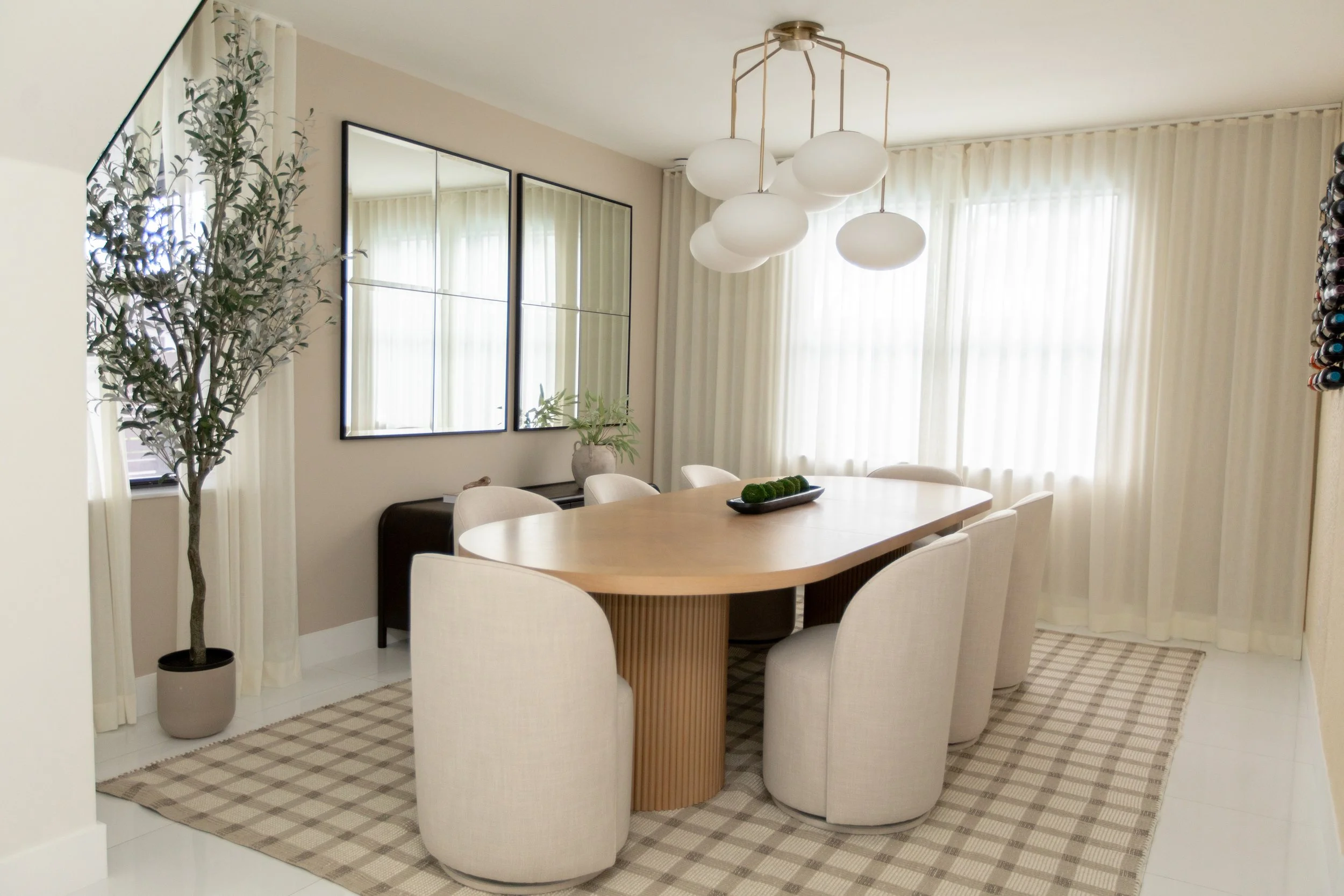
In a world where interiors often feel overfilled and overstimulated, there is something incredibly refreshing about a dining room that embraces restraint. This space is a beautiful example of how minimal styling doesn’t mean empty or unfinished — it means intentional, balanced, and quietly luxurious.
Throughout this home, the design story is consistent:
The new classic — where timeless silhouettes meet modern warmth.
And in the dining room, that philosophy comes to life in the most elegant way. Every element has a purpose. Every texture, shape, and tone works together to create a room that feels welcoming yet uncluttered — a space that breathes.
Why Minimal Doesn’t Mean Bare
Minimal styling is about clarity, not scarcity.
It’s the confidence to let each piece stand on its own without competing for attention.
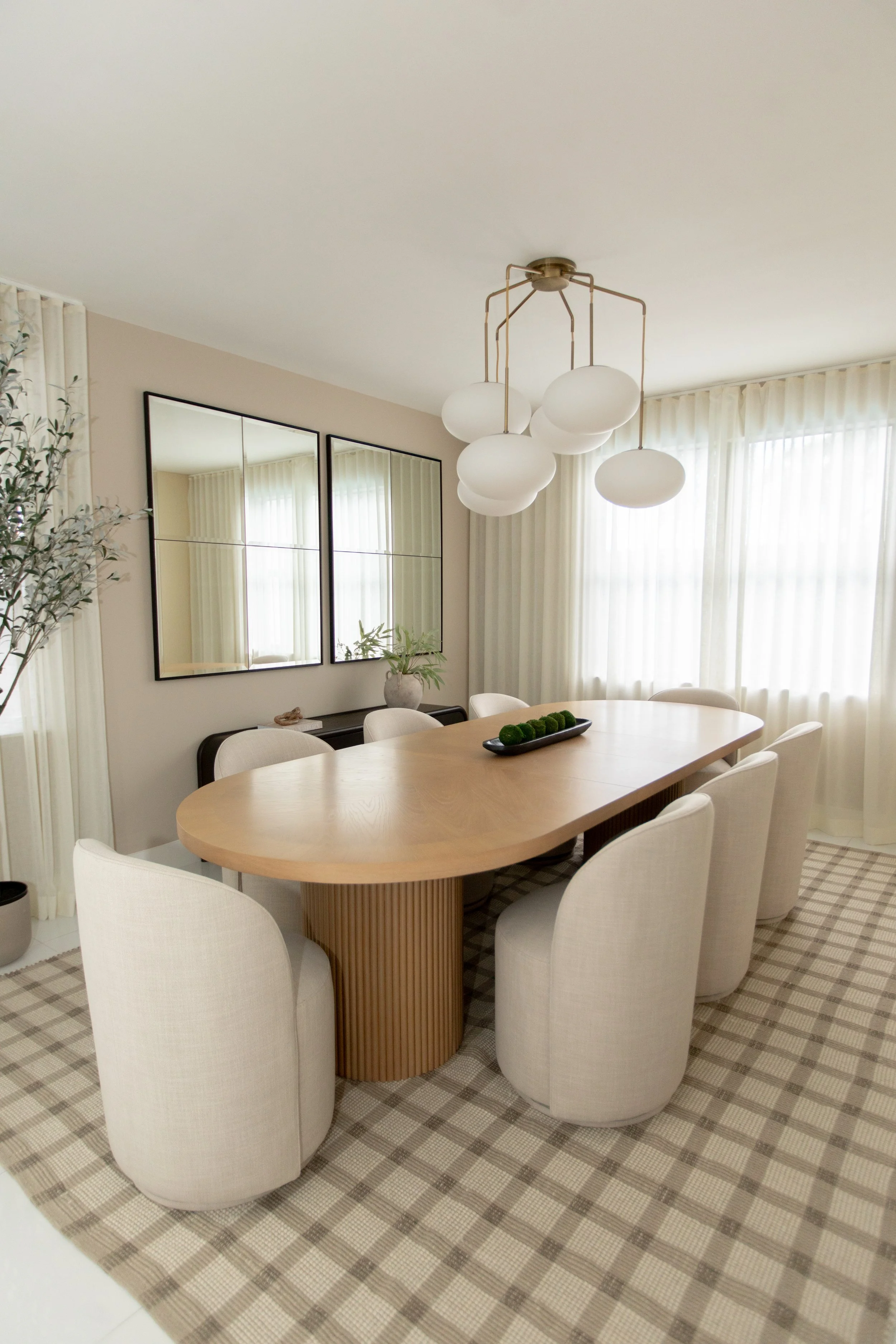
In this dining room, the palette remains soft and neutral — layered creams, warm wood, gentle taupes — allowing form and texture to take center stage. Because the colors are quiet, the materials can speak louder: the fluted wood base of the table, the upholstered chairs, the woven rug, and the sheer drapery all add dimension without adding visual noise.
This is where less becomes more.
The Statement Table: A Piece Worth Showcasing
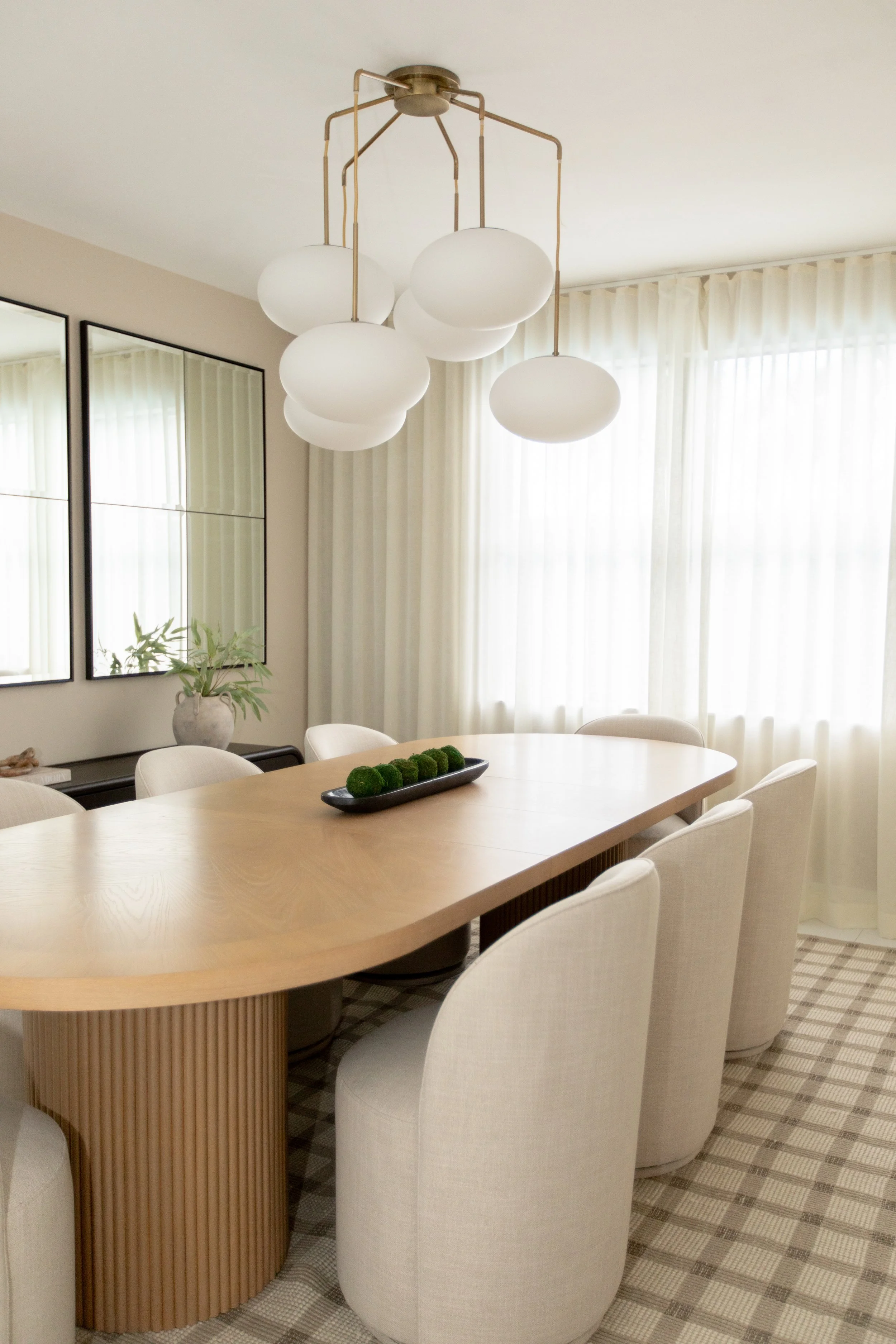
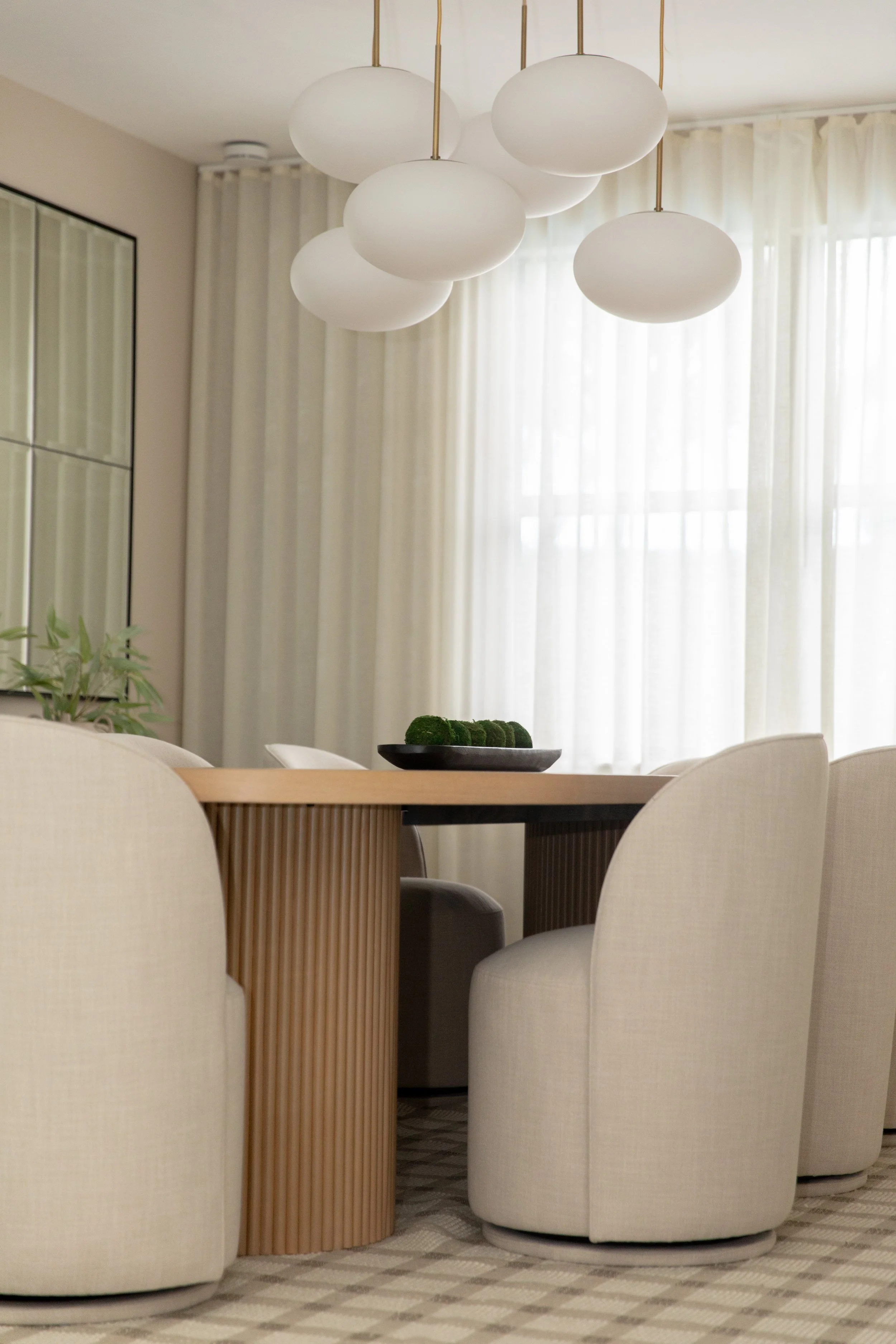
With minimal styling, the furniture becomes the focal point — especially a table as sculptural as this one. The fluted pedestal base adds architectural interest, while the soft oval shape keeps the room feeling warm and organic.
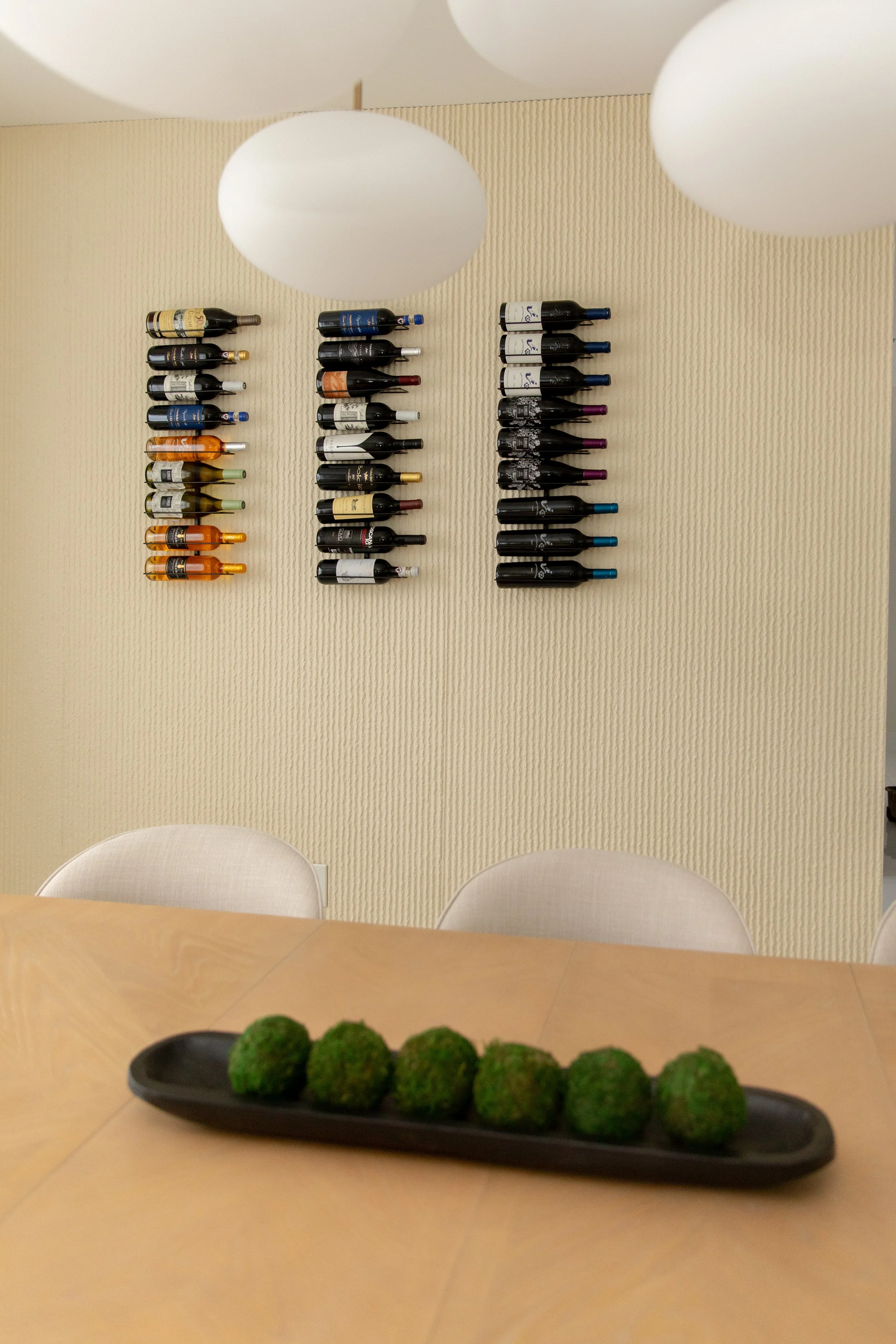
Instead of layering the tabletop with décor, we kept the styling simple:
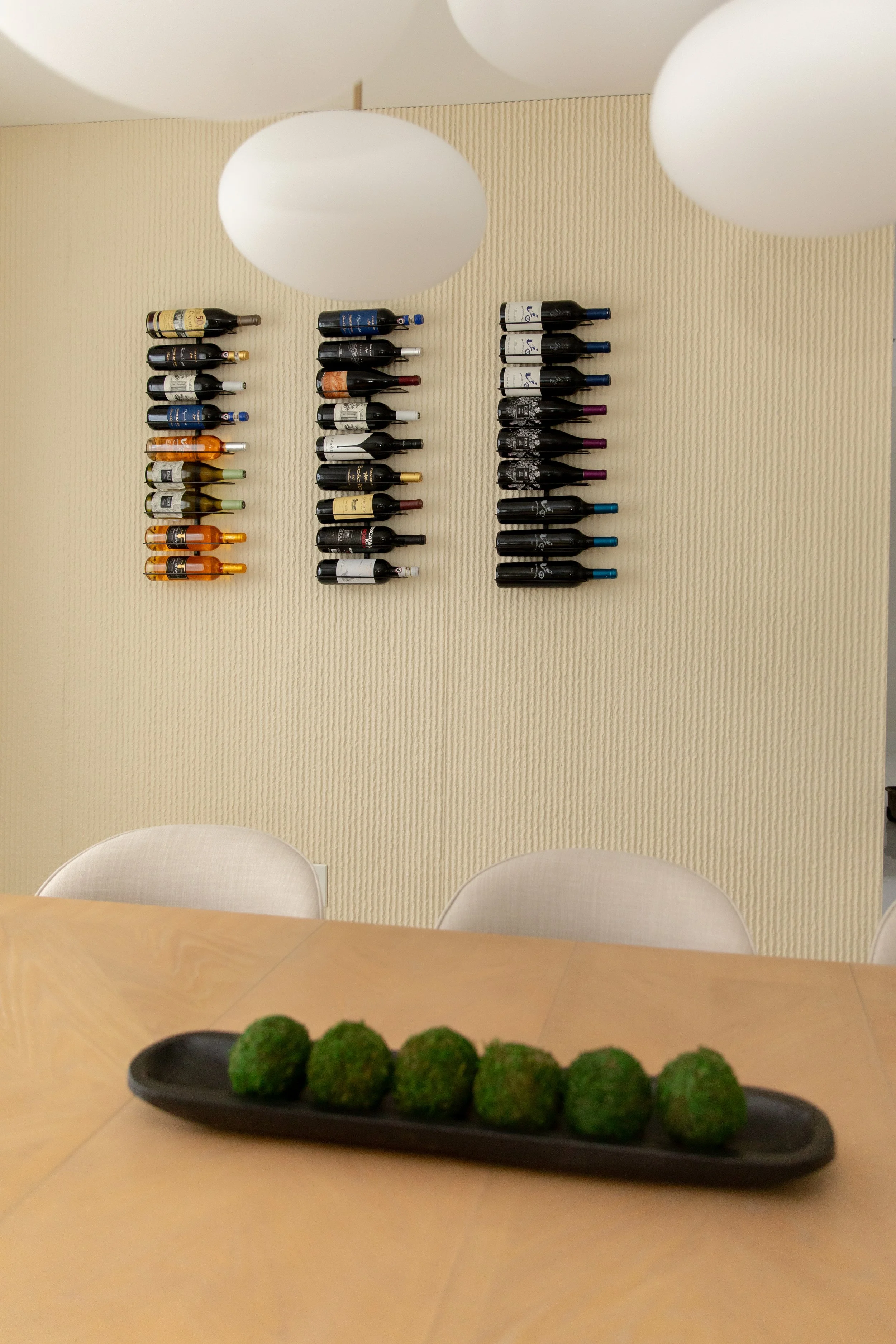
One elongated bowl filled with green orbs.
Just enough to add a hint of color and artistry, but not enough to distract from the beauty of the table itself.
When the furniture is this good, you let it lead.
Soft Shapes, Clean Lines, and a Sense of Balance
Minimal styling thrives on harmony, and this space is full of it.
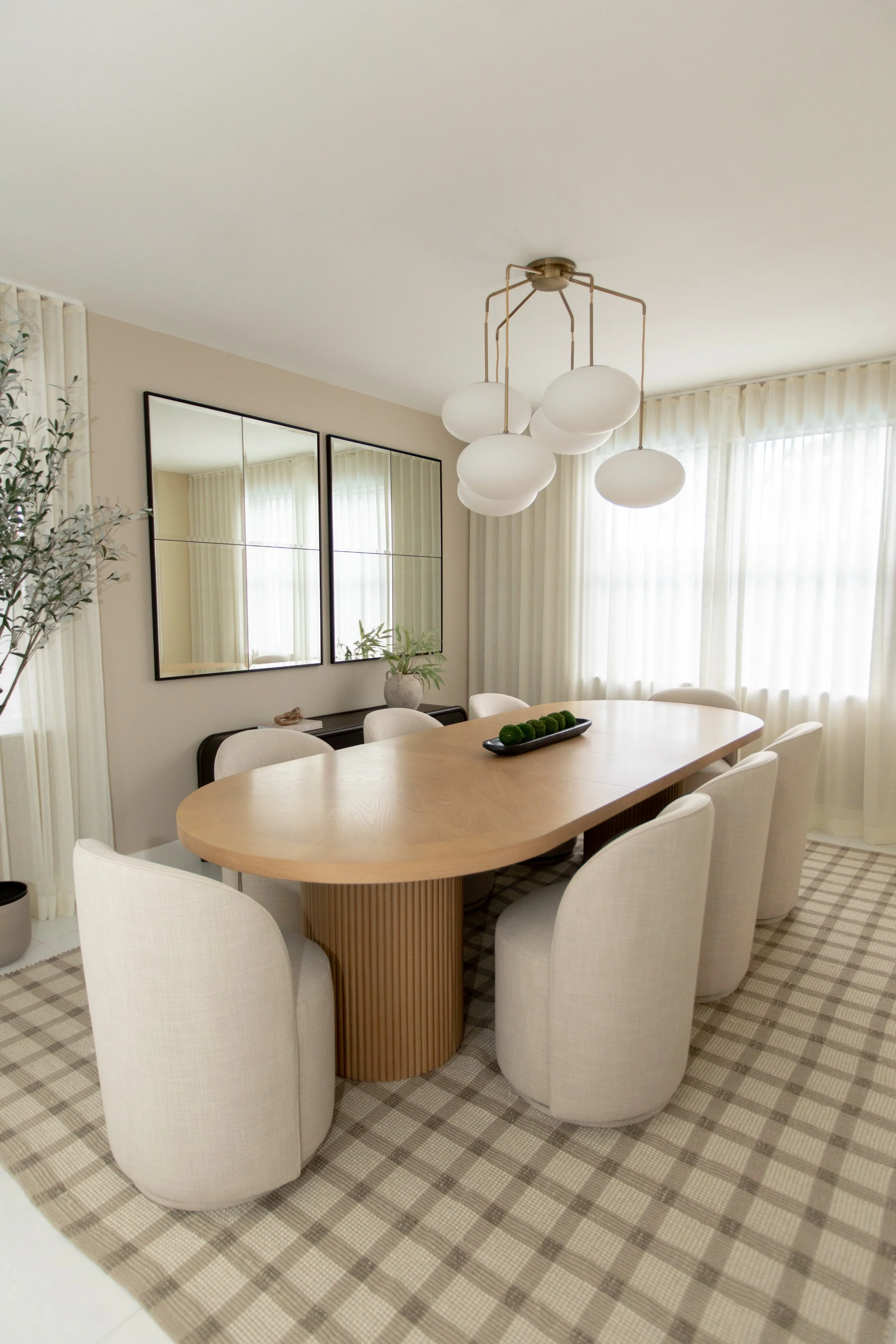
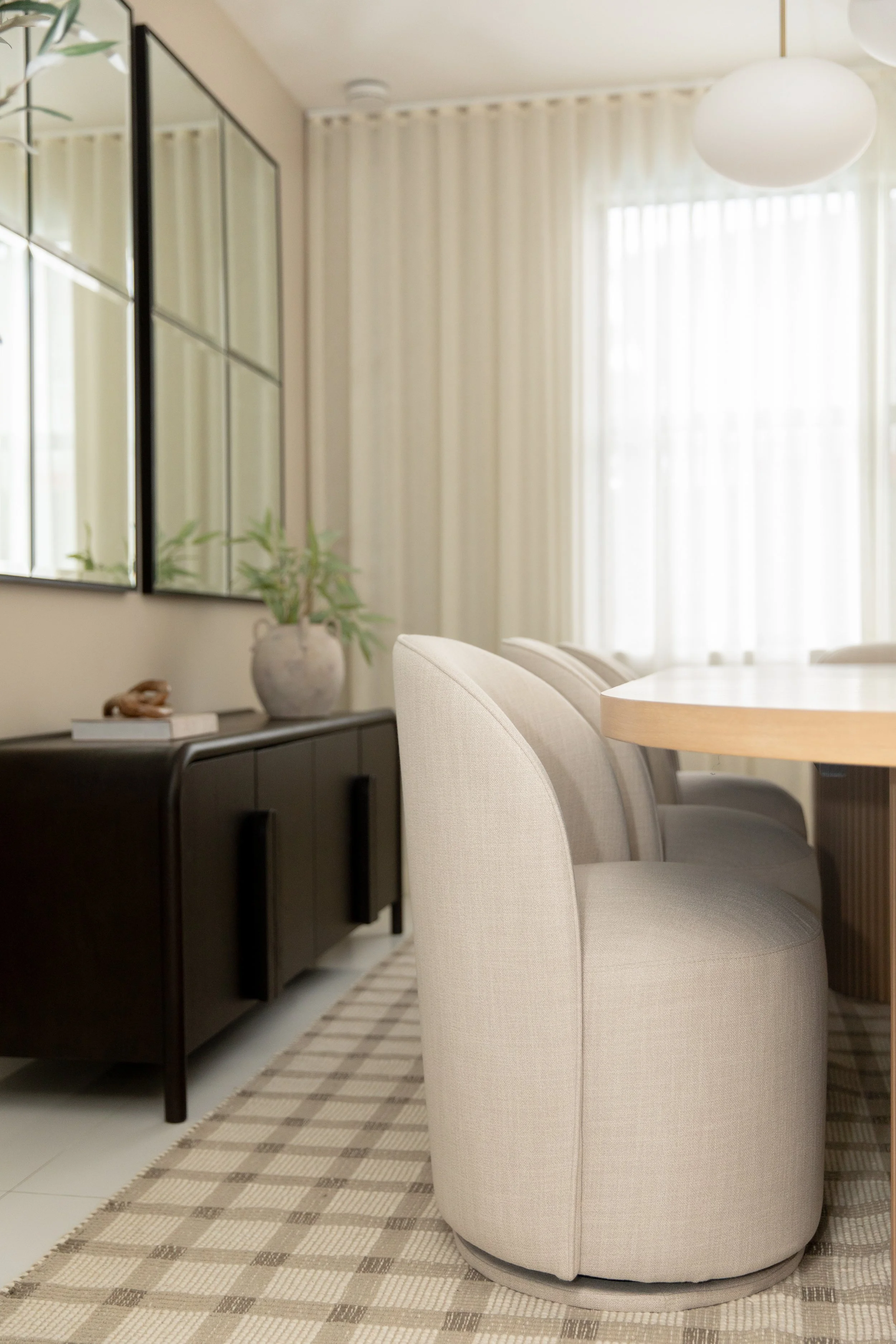
The rounded dining chairs soften the room and invite lingering.
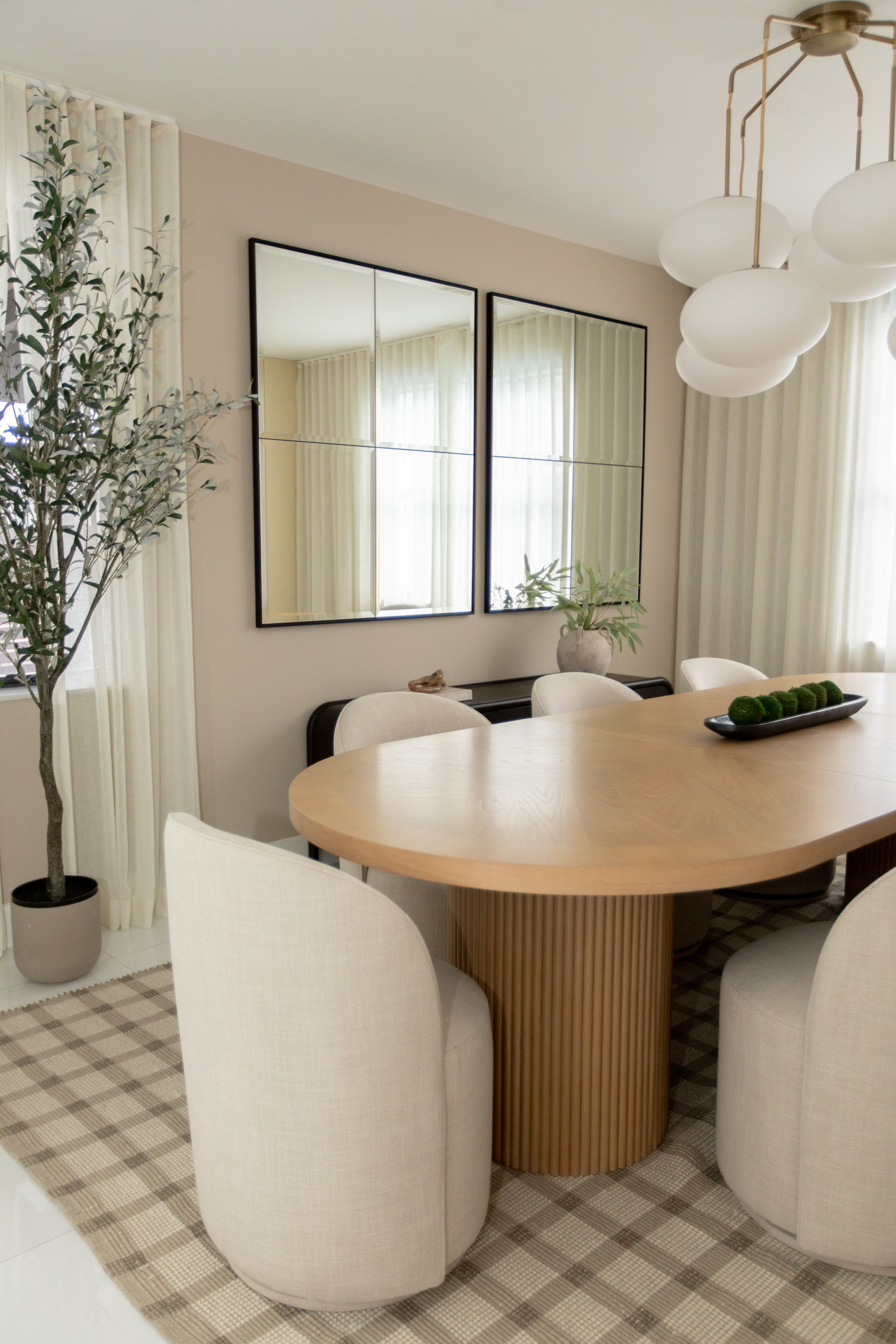
The grid-style mirrors add structure without overwhelming the wall.
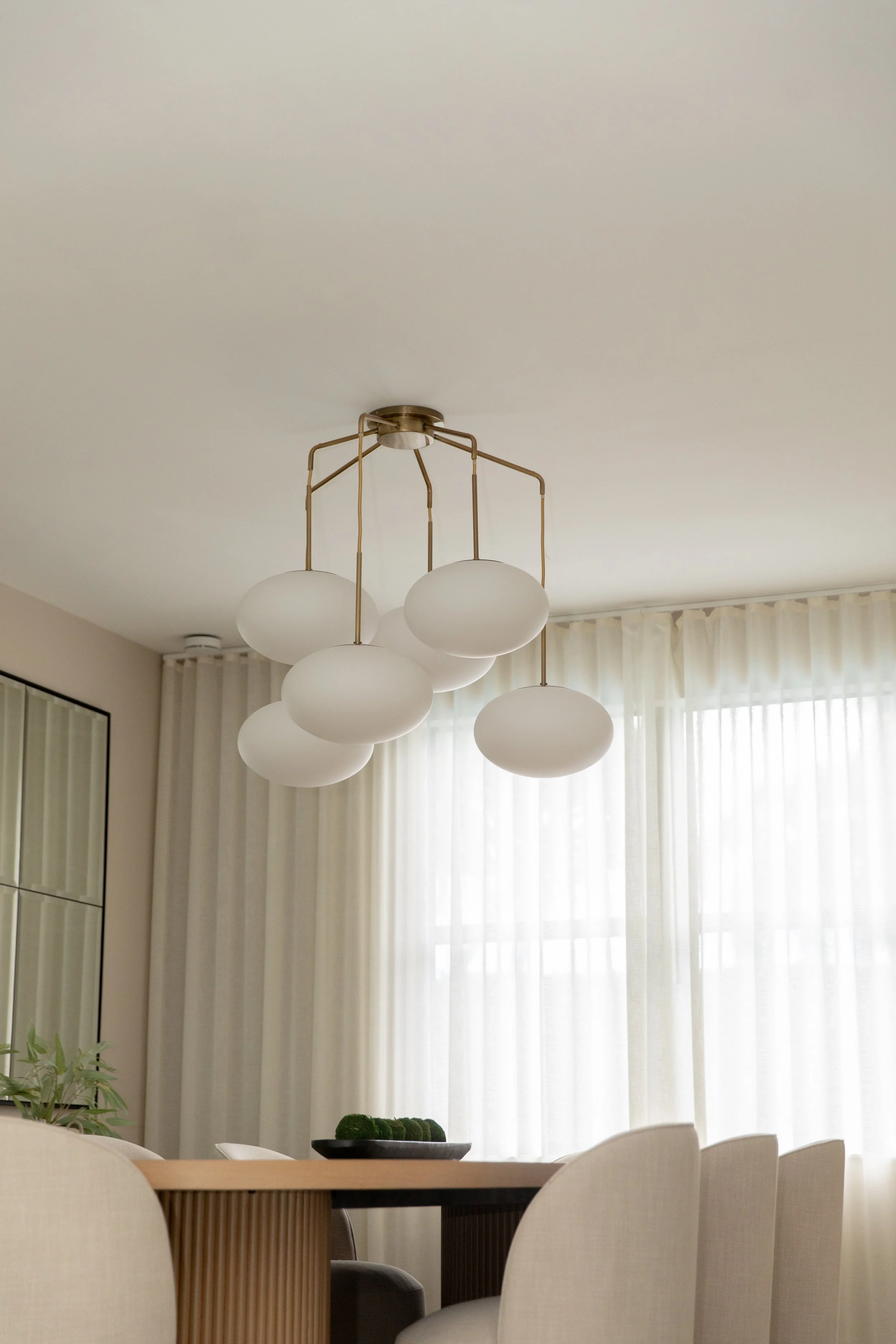
The bubble chandelier floats like a sculpture, adding height and movement.
The checkered rug adds a gentle pattern that grounds the space without competing with the palette.
Together, these pieces form a serene and cohesive whole — proof that simplicity can be deeply dimensional.
Curated Surfaces Make All the Difference
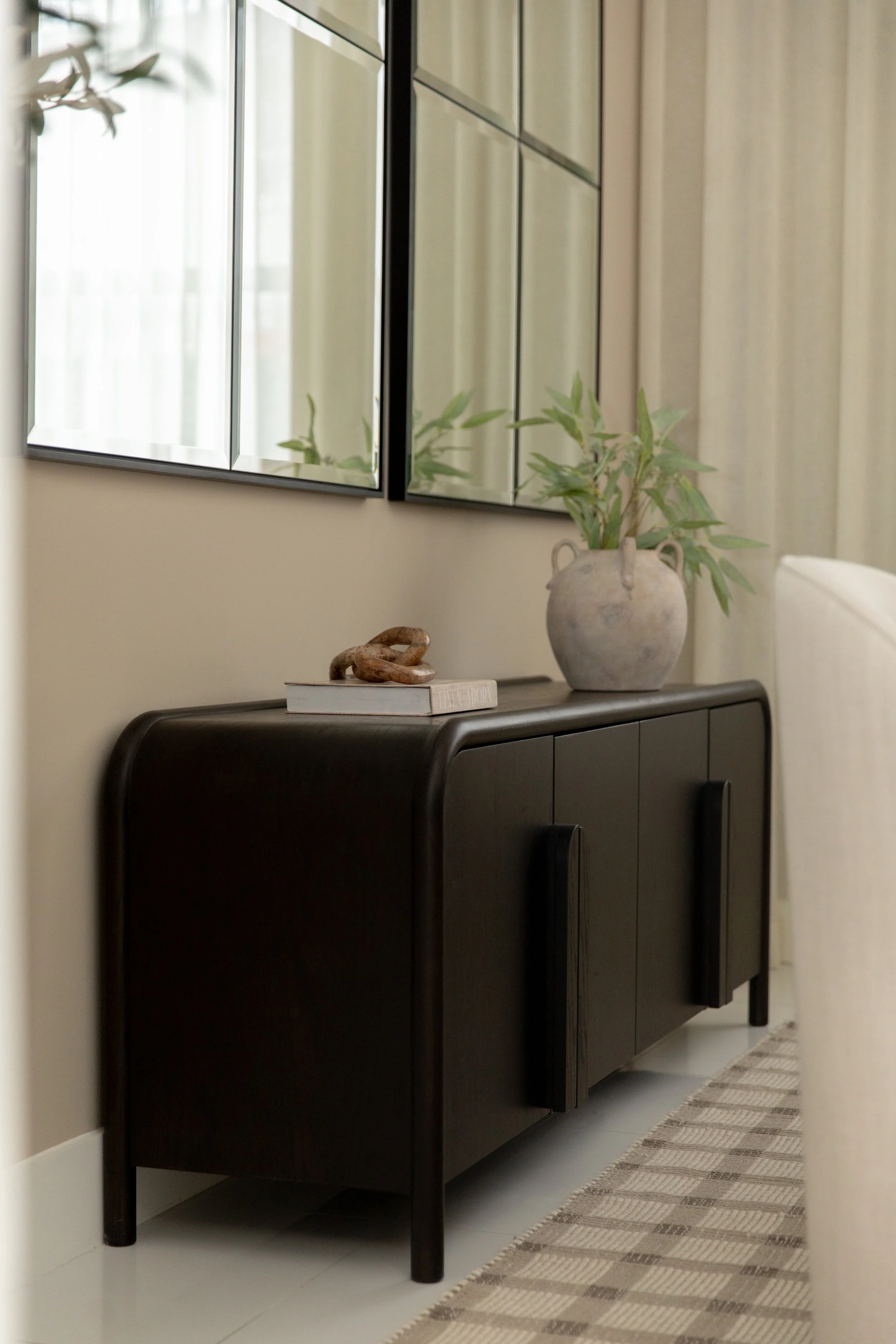
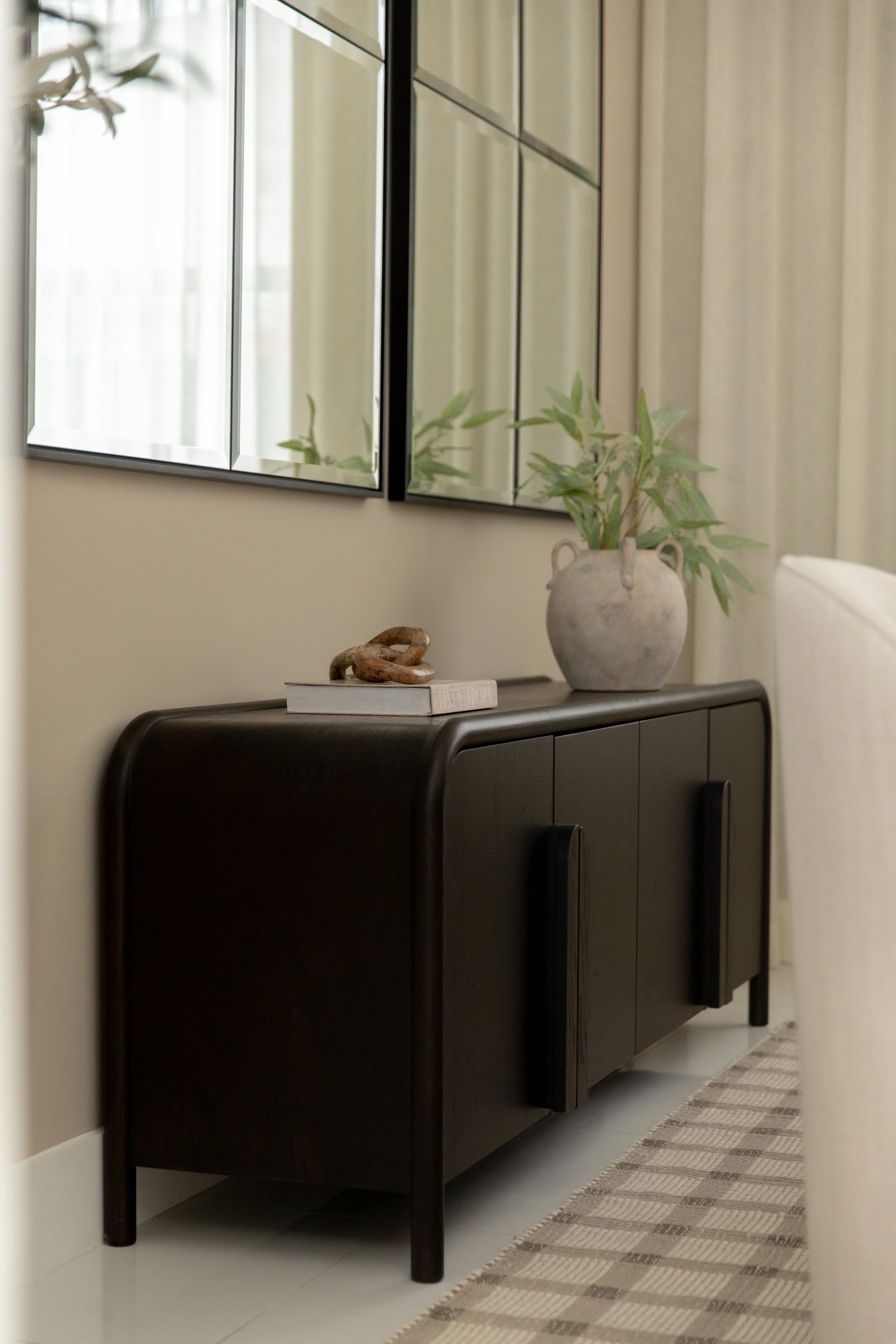
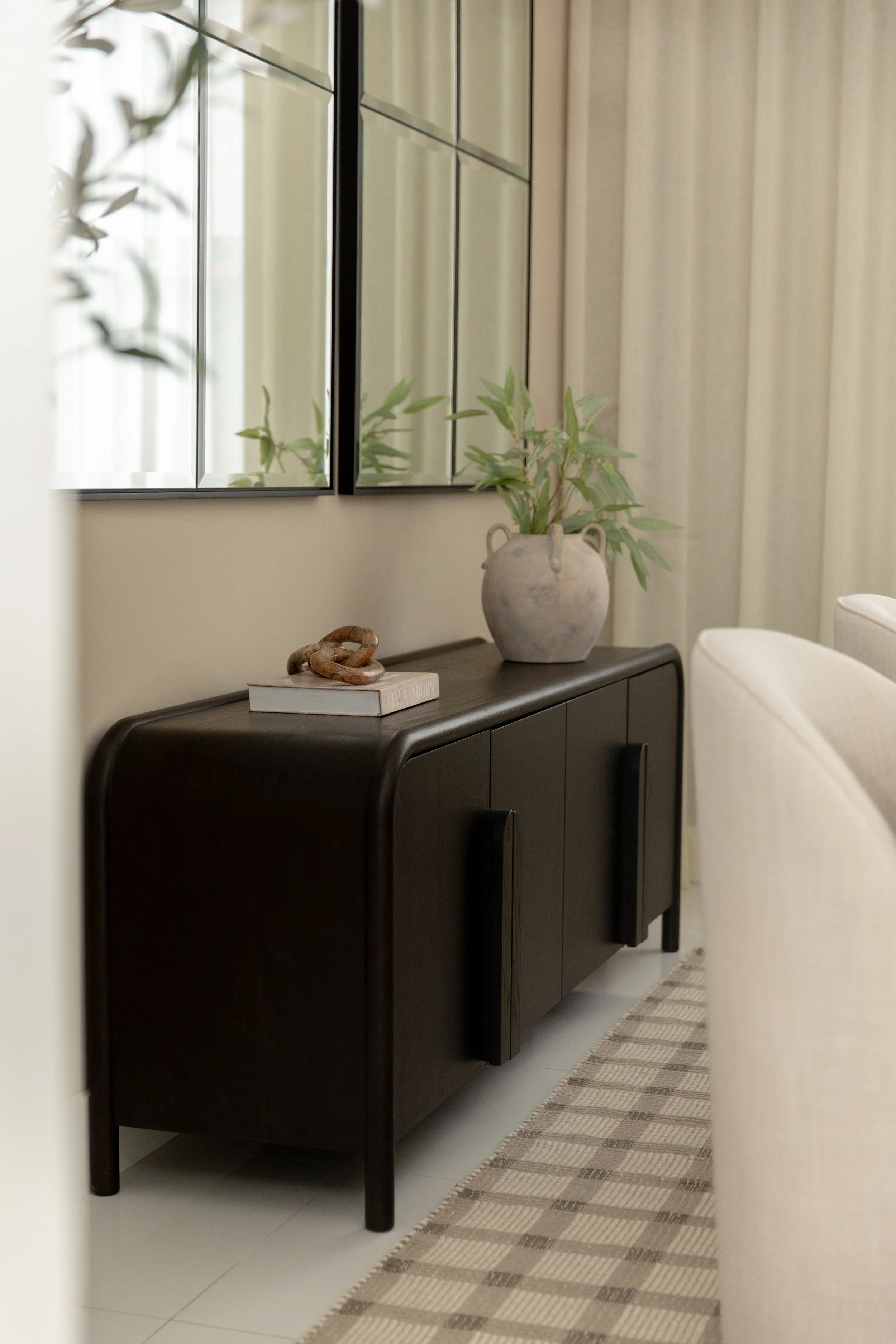
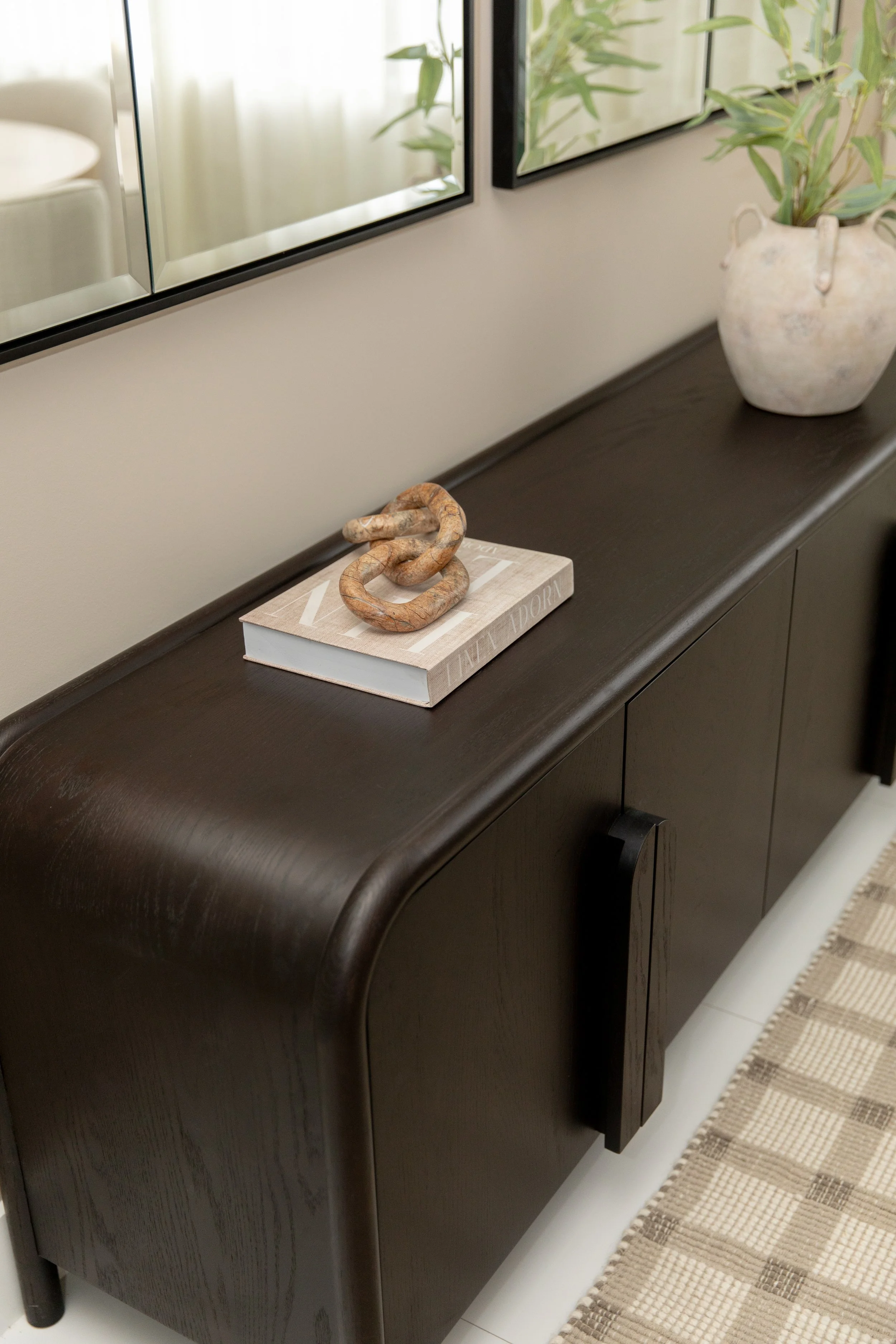
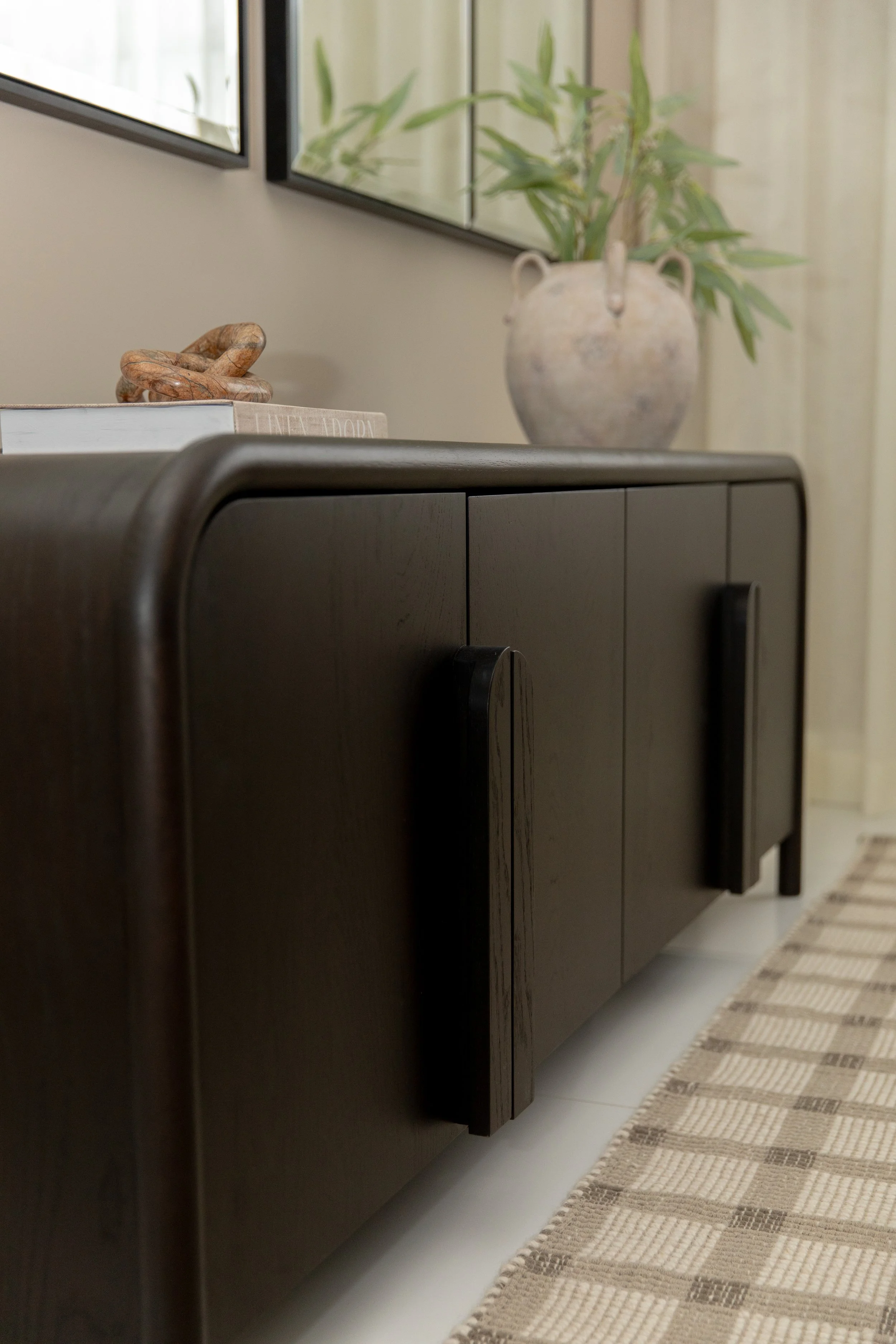
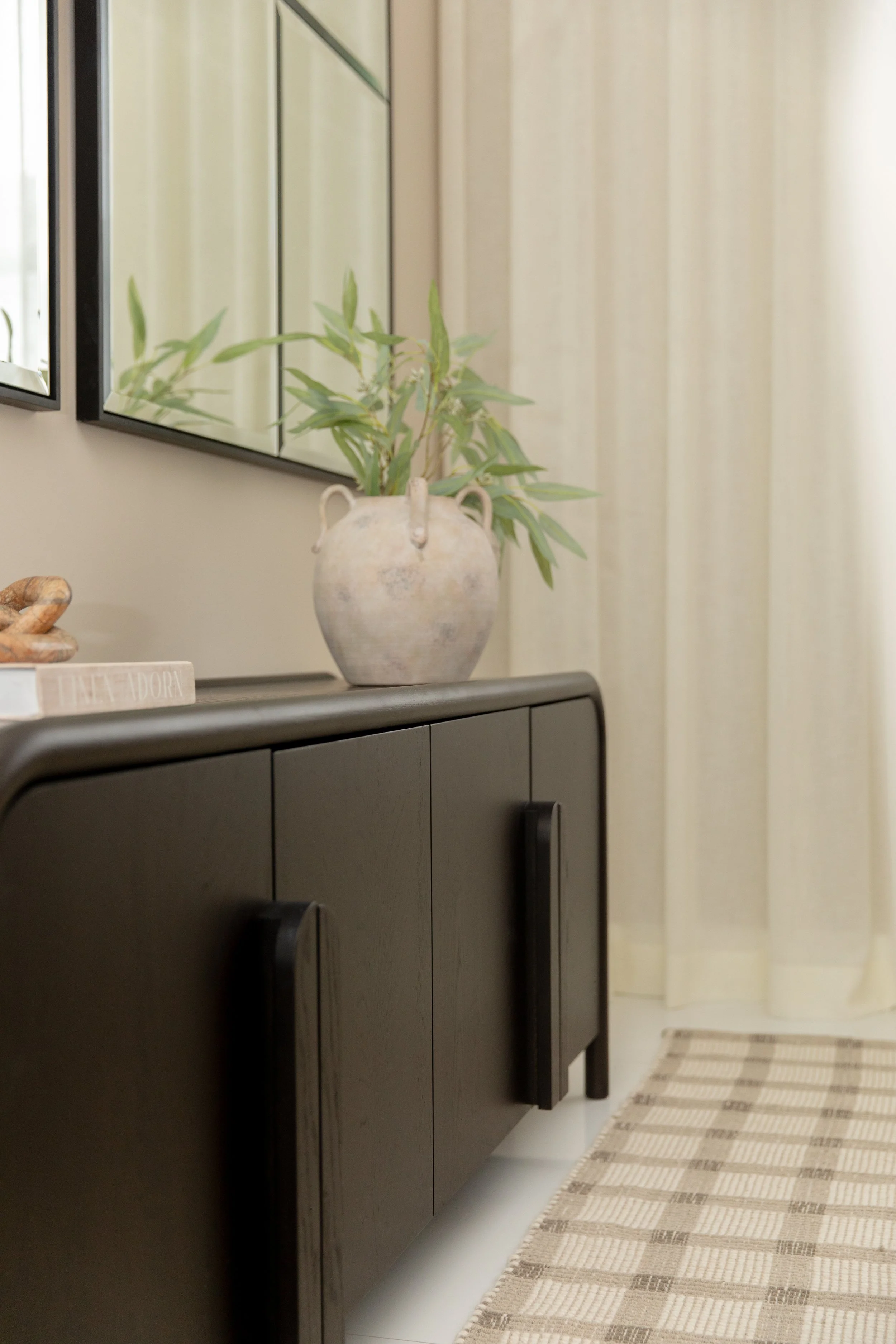
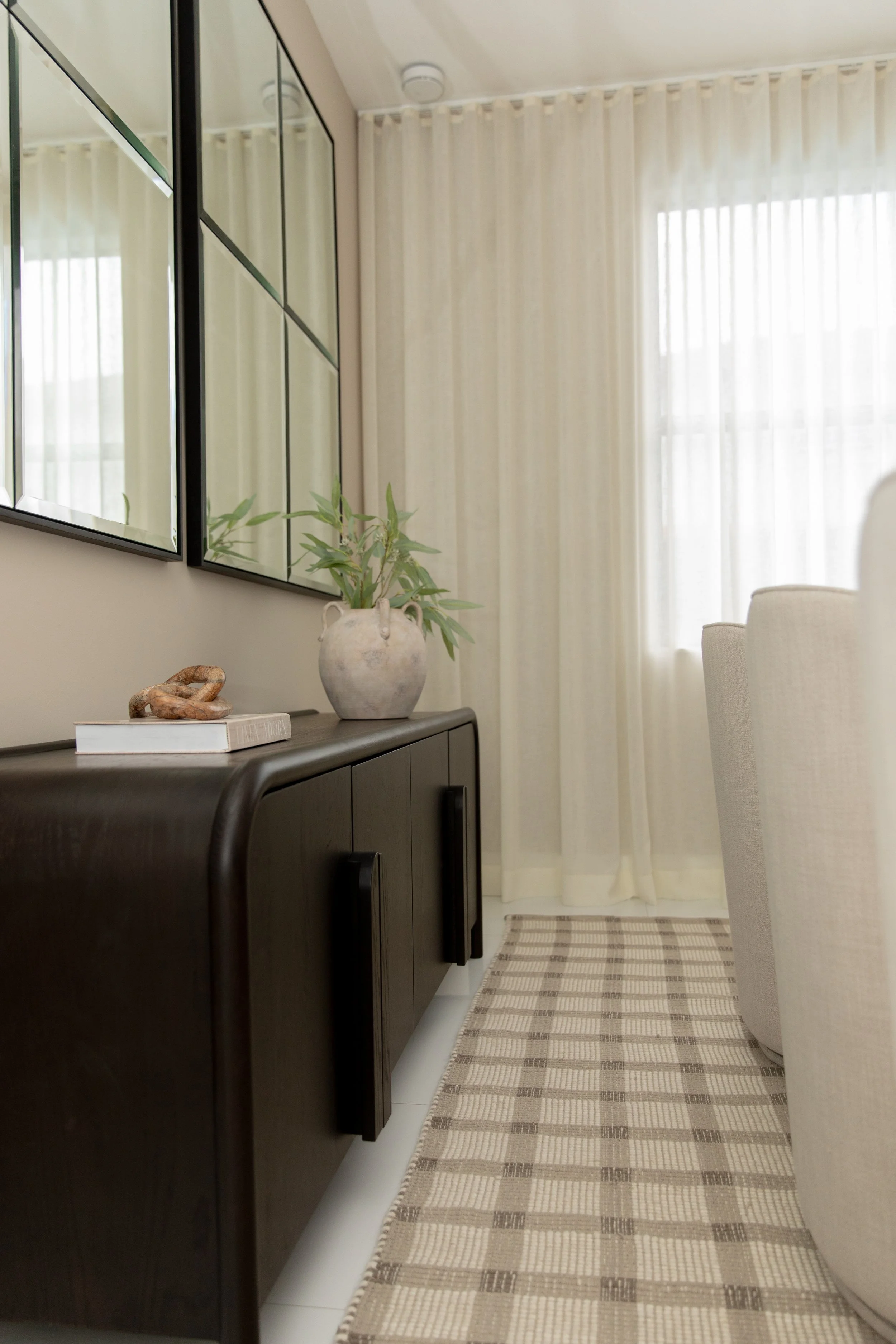
The side table styling is another example of restraint done right. Instead of clutter, it holds only a few carefully chosen pieces: a sculptural vase, a natural branch, a decorative object resting on a book. These elements add texture and life without taking away from the room’s clean and airy feel.
The message is clear:
You don’t need a dozen accessories to make a statement — you just need the right ones.
Light, Texture, and Airiness Work Together
Minimal styling shines brightest when light and texture are used intentionally. In this room:
The sheer drapery filters sunlight softly, adding movement and warmth.
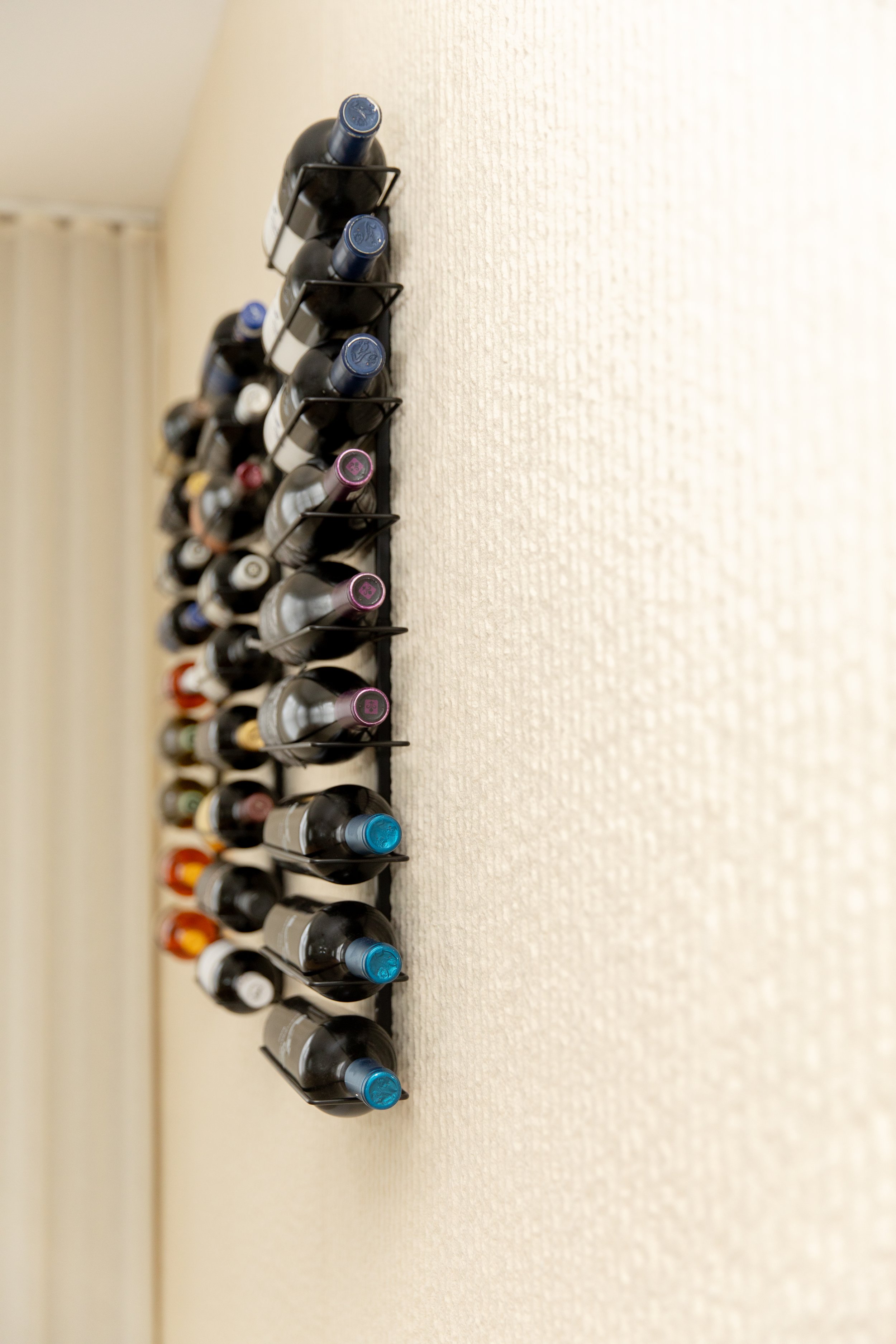
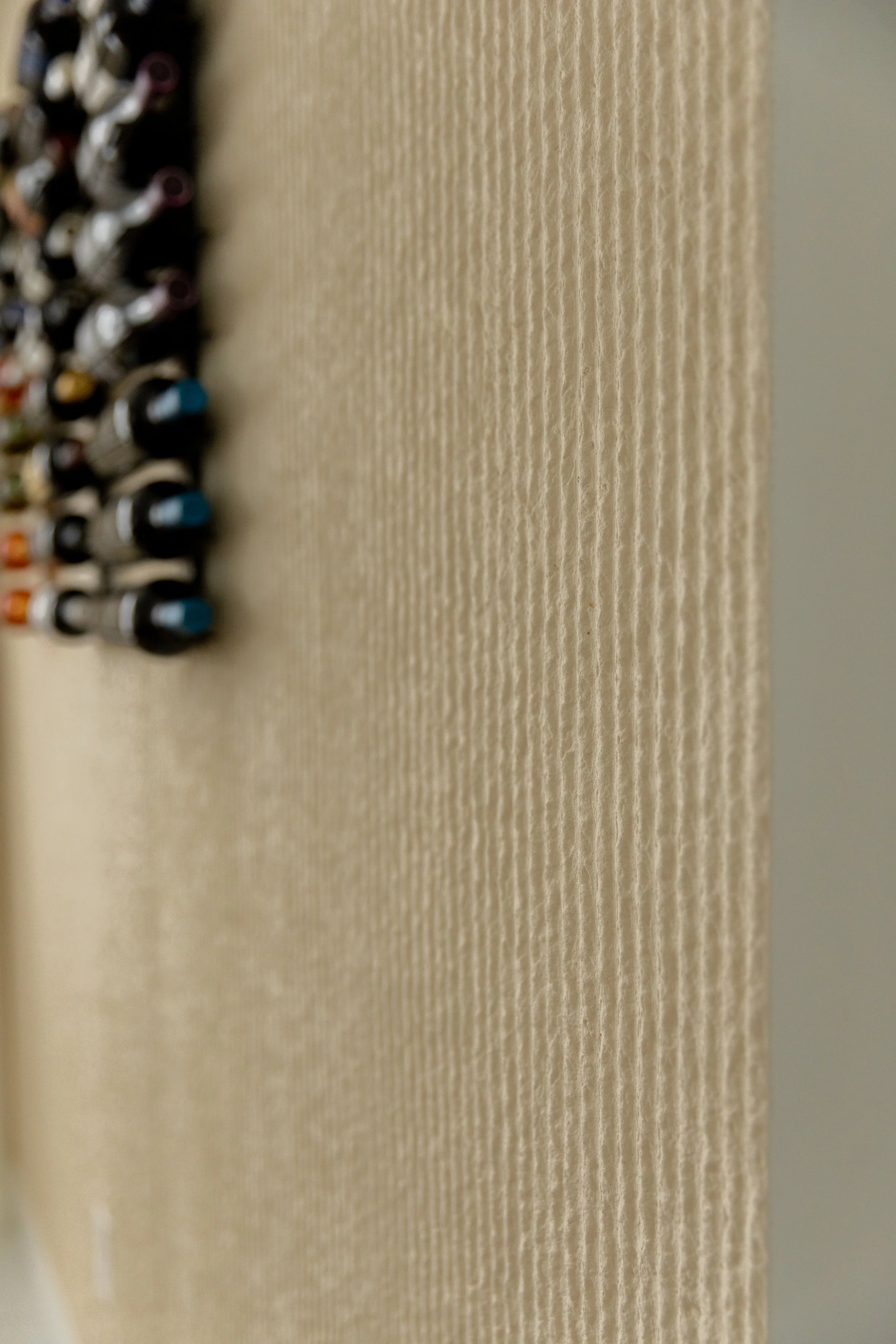
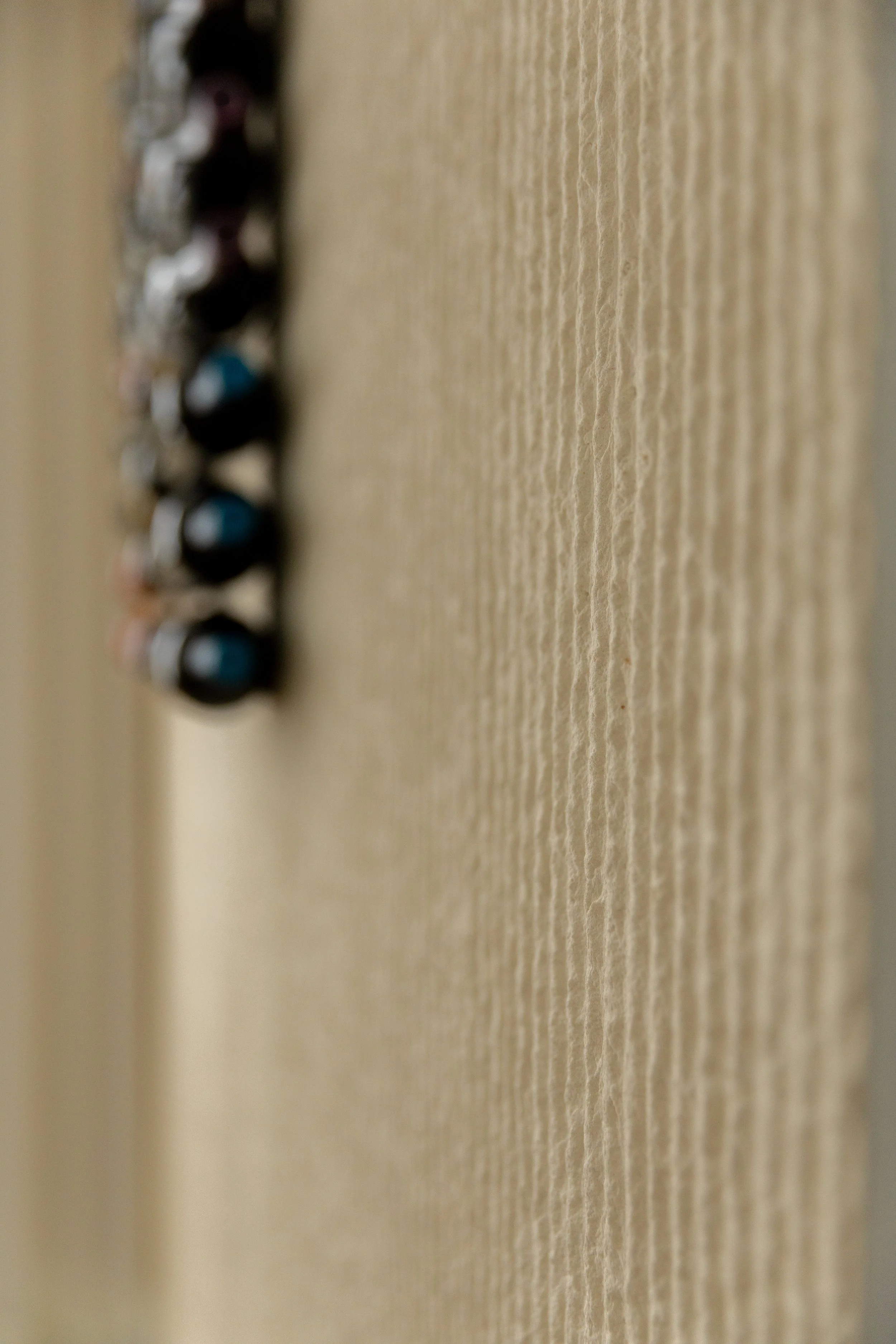
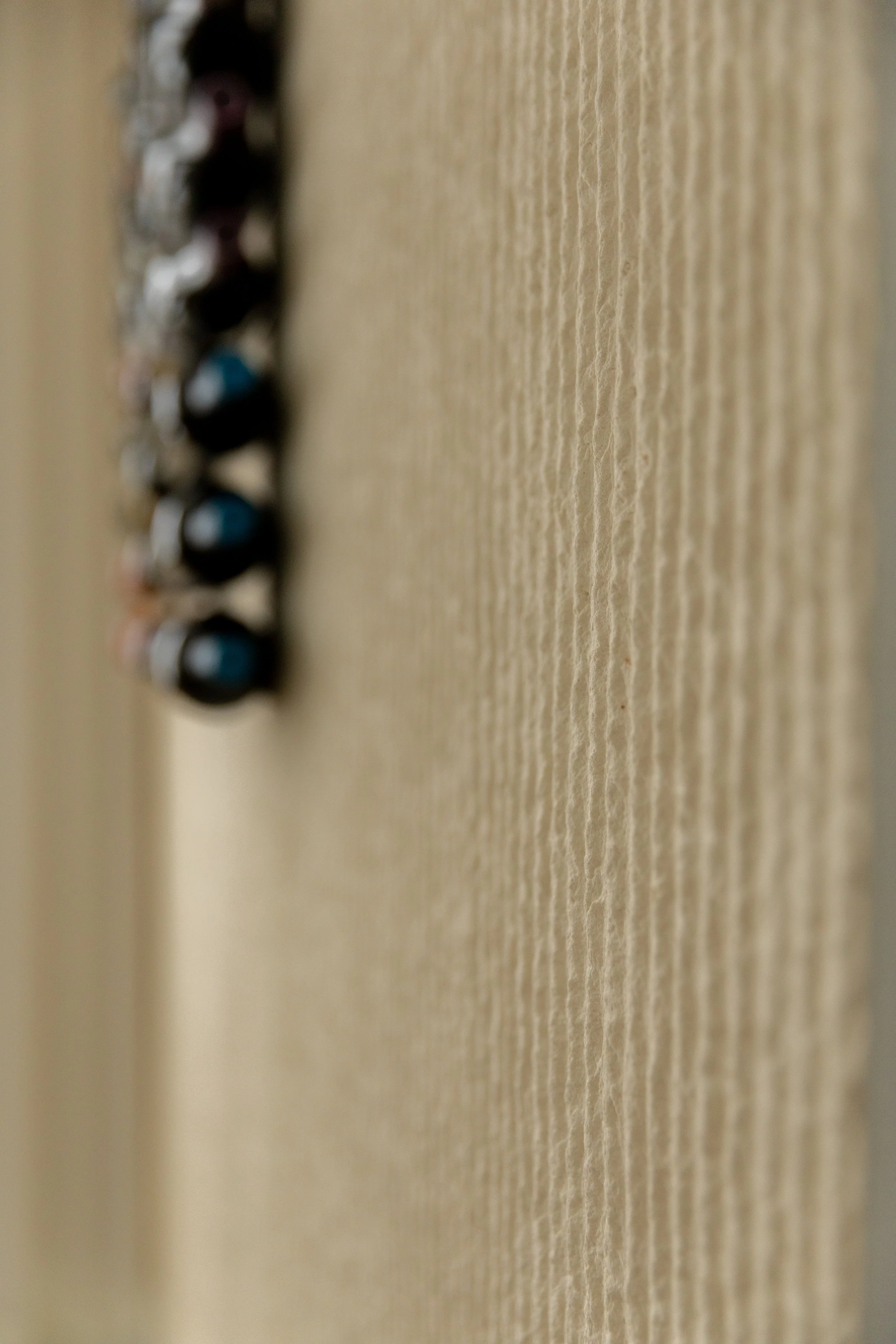
The textured wall introduces subtle depth without drawing attention.
The woven rug adds dimension underfoot, anchoring the layout.
Everything contributes to the atmosphere, making the dining room feel lived-in yet elevated.
When styling stays minimal, these architectural details have the space to shine.
A Dining Room Designed for Presence
This room is a perfect example of how minimal styling enhances, rather than limits, the design experience. It lets the furniture breathe, lets the textures stand out, and gives the entire space a sense of calm that feels both modern and timeless.
It isn’t just about how the room looks — it’s about how it feels.
Quiet, intentional, beautifully balanced.
That is the art of minimal styling, and this dining room embodies it effortlessly.